Low view across wide-plank honey oak hardwood toward a softly lit Phoenix living room with a sofa, fireplace and saguaro outside the window

Phoenix Flooring Installation

Flooring Installation in Phoenix, AZ

Tile, luxury vinyl plank, hardwood, laminate and carpet, installed on a slab that has been checked, flattened and prepped first.

Get Your Free Flooring Quote

Takes about 60 seconds. We'll call you back fast with a price.

Google Business ProfileYelpHouzzMapQuestMantaClutchProvenExpert
Tape measure and clipboard on a Phoenix floor before an estimate
Free in-home measureRooms measured and the slab checked before anything is quoted.
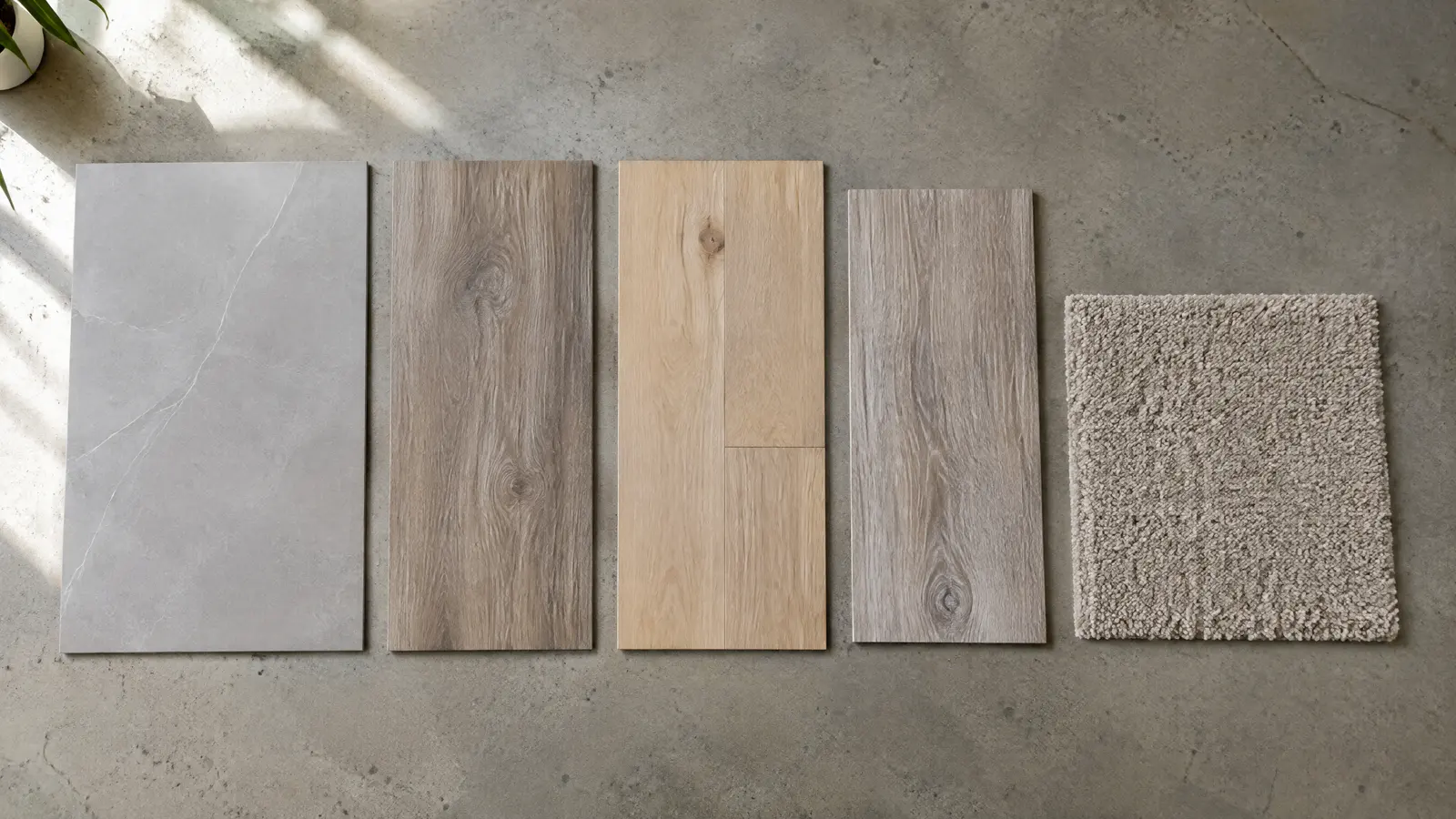
Tile, wood, laminate and carpet samples laid out on a concrete slab
Written estimate firstMaterial, labor, removal and prep listed separately.
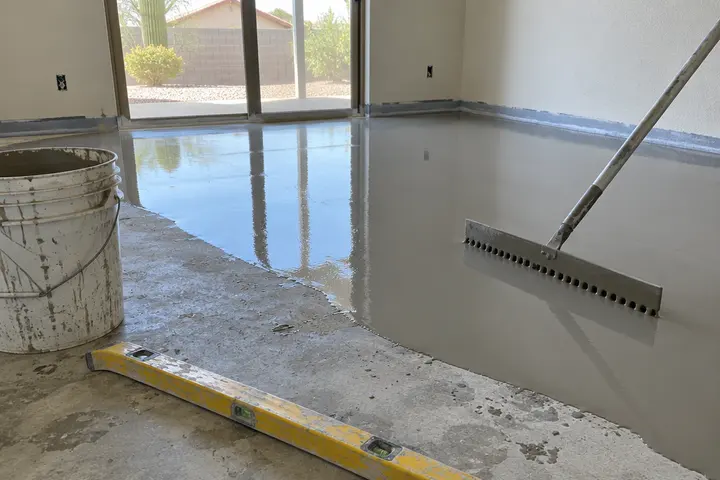
Self-leveling compound being spread across a concrete slab
Slab prep included in the planFlatness, moisture and old adhesive handled before the new floor.
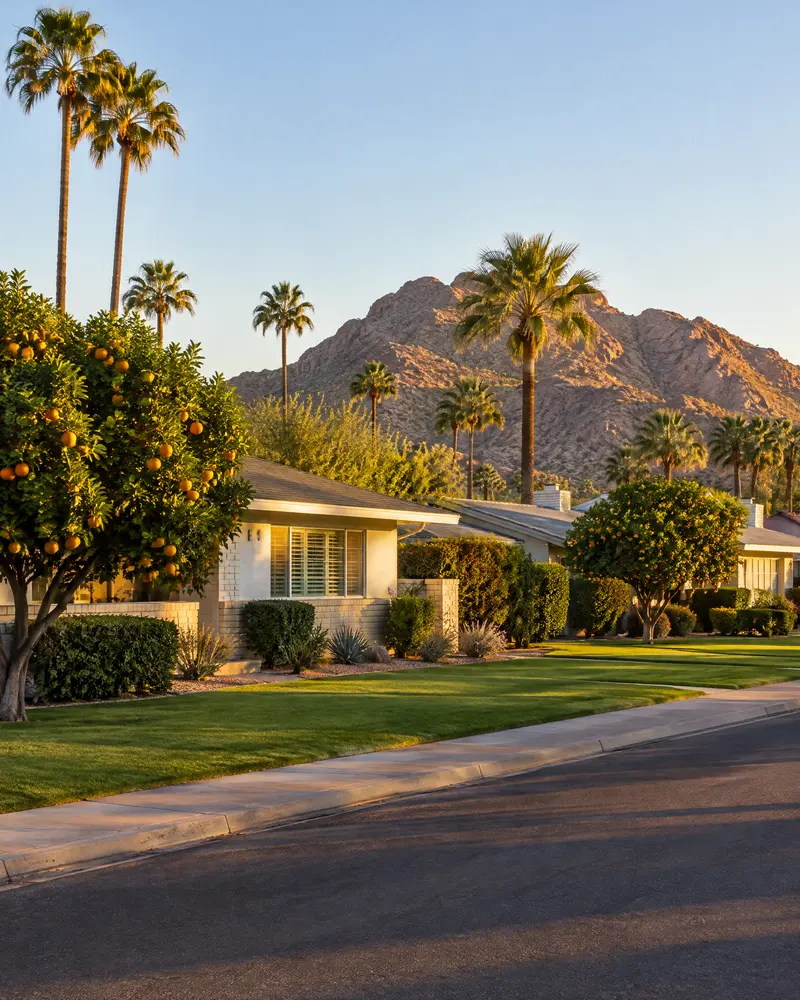
Phoenix neighborhood street with Camelback Mountain behind
All of PhoenixEncanto to Laveen, Arcadia to Deer Valley, and every neighborhood between.

Flooring Installation for Phoenix Homes

Plenty of companies offer flooring installation in Phoenix. What you get with us is real expertise and a straight answer. We won’t sell you a product we wouldn’t put in our own homes, and we won’t push a floor that isn’t going to last.

Every job starts with a look at what is already down and what is under it. We tell you what needs to happen to get the job done correctly, and we weigh how much foot traffic the room gets and how Phoenix dust, grit and heat will treat it. Then we recommend the materials that fit: porcelain or wood-look tile where water and grit are a concern, LVP for quiet, waterproof living areas, engineered hardwood where you want real wood, laminate for a budget-friendly wood look, and carpet for bedrooms and stairs.

We bring samples to your home and look at them in the room where they will go, in your light and next to your walls and cabinets, so you know how the floor will look in your space before you commit.

You get a written estimate that breaks out removal, prep and installation, plus a clear timeline of what to expect.

Get a Free Estimate

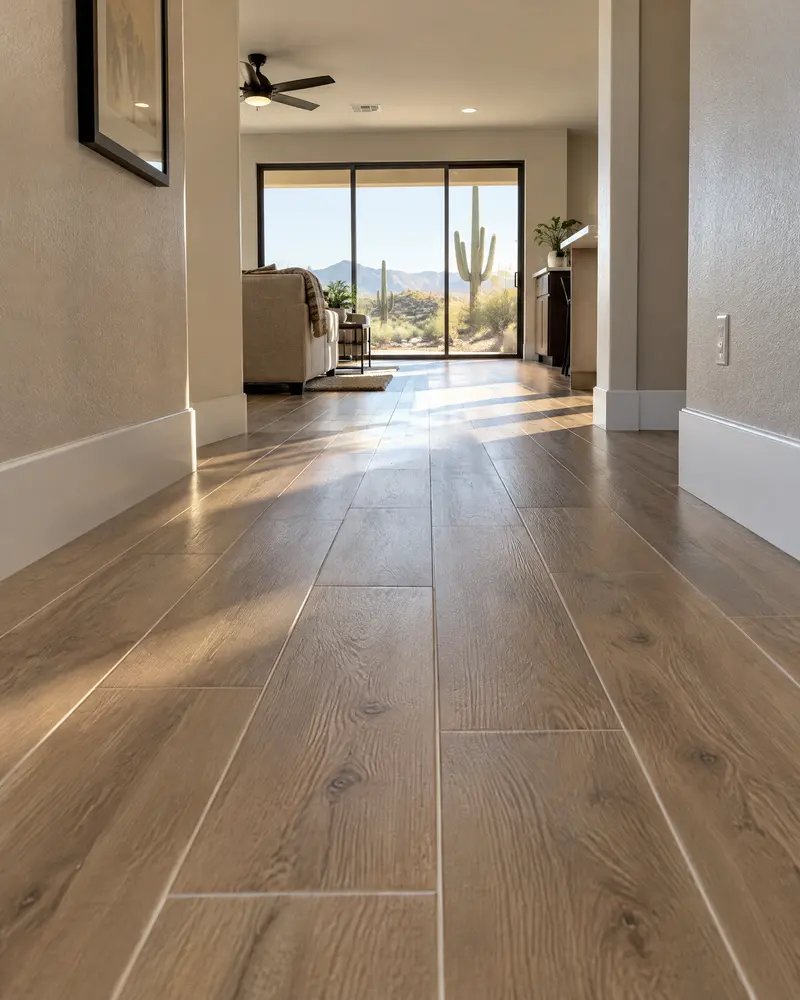
New wood-look porcelain plank tile in a Phoenix home hallway

What Phoenix Does to a Floor

Flooring that works in a milder city can struggle here. The Arizona State Climate Office counts about 163 days a year at 90°F or hotter in Phoenix and about 94 days at 100°F or hotter, with 7.22 inches of rain in a normal year (1991–2020 normals). That heat and dry air shape every flooring choice, from the material to the gap at the wall.

Heat and sun

Floors expand and contract with temperature, and the strongest swings happen near west-facing glass and sliding doors. That is why every floating floor needs its expansion gap at the walls and why we plan transitions at doorways instead of running one long, unbroken plank line through the house.

Dry air

Real wood moves with humidity. The National Wood Flooring Association recommends keeping a wood floor between 60 and 80°F and between 30 and 50 percent relative humidity, according to Hardwood Floors magazine, the association's publication. In a Phoenix home that usually means engineered hardwood rather than solid, acclimated in the house with the air conditioning running before it goes down.

Dust and grit

Fine desert grit tracked in from the yard wears floors like sandpaper. Porcelain tile and a good LVP wear layer handle it best, and entry mats at every exterior door do more for any floor than most people expect.

Older homes

The EPA lists vinyl floor tiles, the backing on vinyl sheet flooring and some floor adhesives among the places asbestos may be found. In a Phoenix home with original vinyl tile or black adhesive under the carpet, we test before anything is sanded, ground or scraped. See floor removal and subfloor prep.

Phoenix Homes by the Numbers

Flooring is one of the most common upgrades in a Phoenix home, whether it is a first house getting rid of builder carpet or a long-time home replacing tile from the 1990s. These figures come from the U.S. Census Bureau (American Community Survey 2019–2023):

Phoenix city, AZACS 2019–2023
Owner-occupied housing unit rate57.1%
Median value of owner-occupied homes$381,900

For most owners a flooring project is a few thousand dollars on a home worth far more, which is why it pays to choose the floor for how the house is actually used: kids, pets, the pool door, the dog run, and how long you plan to stay. In rentals and homes headed for sale, durable mid-range LVP is usually the practical choice. In a home you plan to keep, porcelain tile in the main living areas lasts for decades.

Our Phoenix Flooring Services

Each service has its own page with materials, prep details and common questions.

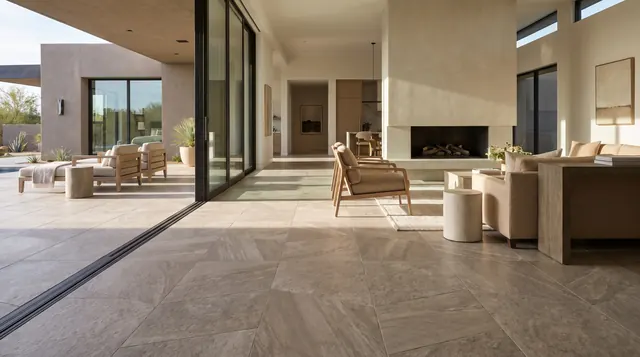
Large-format stone-look porcelain tile running from a living room out to a covered patio in a desert home

Tile Installation

Porcelain, ceramic and stone tile for floors, showers and backsplashes, set over a properly prepared slab.

Learn more →
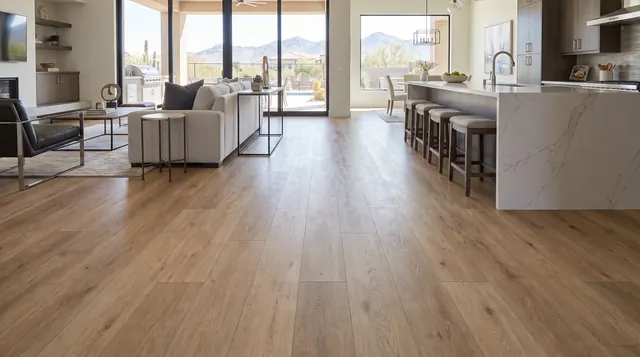
Light oak luxury vinyl plank flooring through an open kitchen and living room with mountain views

Luxury Vinyl Plank (LVP)

Waterproof plank flooring that floats over a flattened slab, with expansion gaps planned for Phoenix sun.

Learn more →
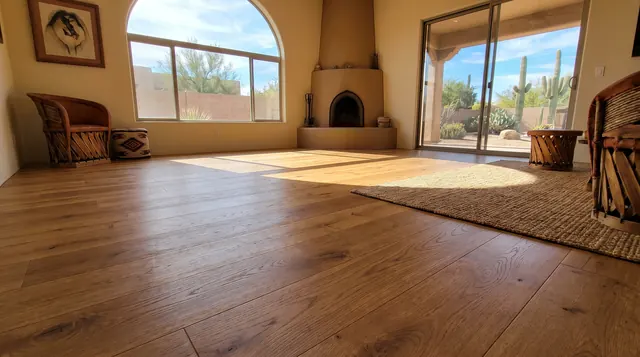
Wide-plank oak hardwood floor in a sunlit adobe-style living room with a kiva fireplace

Hardwood Floor Installation

Engineered and solid hardwood, installed with the moisture testing and acclimation a slab home needs.

Learn more →
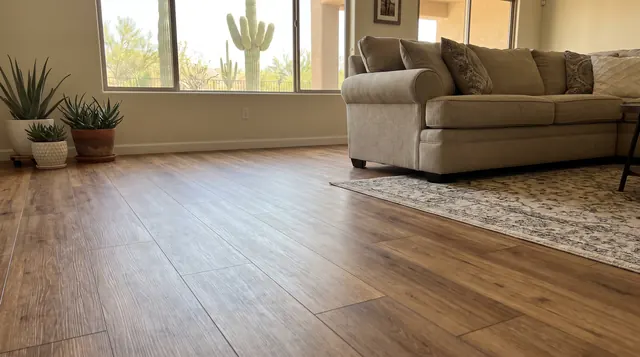
Wood-look laminate flooring in a Phoenix living room with saguaro cactus outside the window

Laminate Flooring Installation

A budget-friendly wood look with a hard wear layer, installed over a moisture barrier.

Learn more →
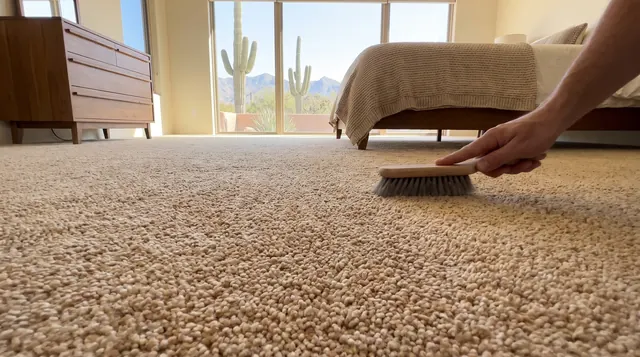
Plush beige carpet in a bedroom with a view of saguaro cactus and desert mountains

Carpet Installation

Stretch-in carpet and pad for bedrooms, stairs and family rooms, fastened to tack strip on concrete.

Learn more →
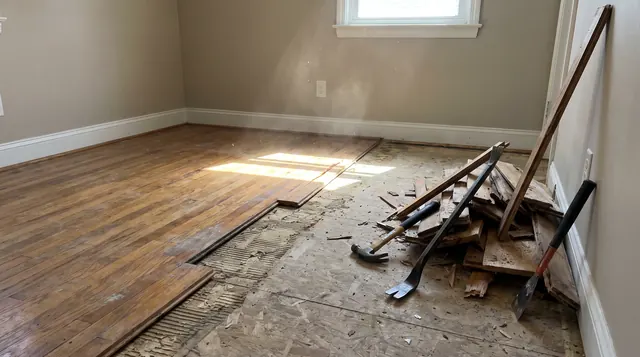
Old hardwood flooring partly torn out to the subfloor, with a pry bar, hammer and scraper beside the debris

Floor Removal & Subfloor Prep

Tearing out old tile, carpet or wood, grinding the slab and getting it flat before new flooring goes down.

Learn more →

View all services

What Each Floor Is Like to Live With

Tile Installation

Porcelain and ceramic tile are the classic Phoenix floor for a reason: they are waterproof, they stay cool underfoot in summer and they shrug off the grit that blows in from the yard. Porcelain, which under the ANSI A137.1 standard absorbs 0.5% of its weight in water or less, is the better choice for main living areas, kitchens and anything near the pool door. Wood-look porcelain planks give the look of hardwood with the durability of tile. The trade-off is labor: tile is set by hand in thinset, needs a flat slab and takes longer than a floating floor. Compare the two types in our porcelain vs. ceramic guide.

Luxury Vinyl Plank (LVP)

LVP is the floor most Phoenix homeowners ask about now. Its vinyl core is waterproof, it is quieter and warmer underfoot than tile, and rigid-core planks click together and float over the slab, so a whole house can often be done in days rather than weeks. Choose a product with a thick wear layer if you have pets or kids, and plan transitions at doorways so long runs have room to move in the heat. LVP can often go over flat, well-bonded tile; see can you put LVP over tile.

Hardwood Floor Installation

Real wood brings warmth no other floor quite matches, and it can be refinished. In the desert it needs respect: the National Wood Flooring Association recommends keeping wood floors between 30 and 50 percent relative humidity and 60 to 80°F, so engineered hardwood, which is more stable than solid boards, is the usual choice on a Phoenix slab. It is glued down or floated and acclimated in the house first. Keep it out of bathrooms and laundry rooms.

Laminate Flooring Installation

Laminate gives a convincing wood look with one of the hardest, most scratch-resistant surfaces of any floor, often at a lower price than LVP. Its wood-fiber core is the catch: standing water can swell the seams, so it belongs in living rooms, bedrooms and offices rather than kitchens and baths. Not sure which to choose? Read LVP vs. laminate.

Carpet Installation

Carpet is still the favorite for bedrooms, lofts and stairs: it is soft, quiet and warm on winter mornings, and it is one of the less expensive floors to install. The pad matters as much as the carpet, and a good stretch-in keeps it from rippling. Many Phoenix homes pair hard floors in the living areas with carpet in the bedrooms.

Floor Removal & Subfloor Prep

Most flooring jobs here start with something coming out, often tile set right on the slab. Removal is dusty, heavy work, and what is left behind decides how the new floor turns out: old thinset is ground off, high spots are flattened, low spots filled, cracks covered and moisture handled for the floor going down. In older homes, original vinyl tile or black adhesive is tested first, because the EPA lists those materials among the places asbestos may be found.

Choosing Flooring for a Phoenix Home

FlooringWaterScratches and gritFeel underfootBest rooms
Porcelain tileWaterproofExcellentHard, coolKitchens, baths, living areas
Luxury vinyl plankWaterproof coreGoodSofter, quietWhole house, kitchens, laundry
Engineered hardwoodSpills onlyFair to goodWarmLiving, dining, bedrooms
LaminateSpills onlyVery goodFirmLiving rooms, bedrooms, offices
CarpetNot for wet roomsHides wearSoft, warmBedrooms, stairs, lofts

Many Phoenix homes mix two floors: tile or LVP through the main living areas and carpet in the bedrooms. Planning transitions at each doorway keeps the change clean.

How Much Does Flooring Installation Cost in Phoenix?

New flooring costs about $4 to $15 per square foot installed on average, or roughly $2,000 to $7,500 for 500 square feet, according to HomeGuide. Angi puts a typical installation at about $3,161 within a $1,530 to $4,860 range. These are national figures; the packages below show the ranges by floor type.

Essential

Laminate flooring

$4–$14*

per sq ft, installed

Bedrooms, offices and living rooms on a budget

  • Laminate planks with underlayment
  • Installed over a checked, prepped slab
  • Baseboards undercut or reset, transitions at doorways
  • Free in-home measure and samples
  • Ask about warranty coverage
Get My Quote

Premium

Porcelain or ceramic tile

$12–$50*

per sq ft, installed

Kitchens, baths and main living areas

  • Porcelain or ceramic tile, set in thinset
  • Slab flattened and crack isolation where needed
  • Grout and transitions included in the plan
  • Free in-home measure and samples
  • Ask about warranty coverage
Get My Quote

*Pricing based on national cost ranges, per square foot with installation. Removing an old floor and leveling the slab are priced separately. Your price comes from a written estimate after a free in-home measure.

What changes the price in a Phoenix home

  • The floor you choose. Laminate and LVP sit at the lower end, tile and hardwood higher. See the full flooring cost guide.
  • What is coming out. Tile removal runs $2 to $7 per square foot according to HomeGuide, and it is common in Phoenix homes with original tile.
  • The slab. Grinding high spots, filling low ones and crack isolation are part of the job when a slab is out of flat. Large-format tile and long planks need the flattest floor.
  • Layout and trim. Stairs, diagonal or herringbone patterns, many doorways and baseboard work all add labor.

See the full flooring cost guide

Why Preparation Matters Before Flooring Installation

Self-leveling compound spread over a concrete slab before flooring

Uneven floors

Large-format tile and long planks need a level surface to lie flat. Before any installation starts, we grind down high spots and fill low ones, so the finished floor looks professional, not patched together.

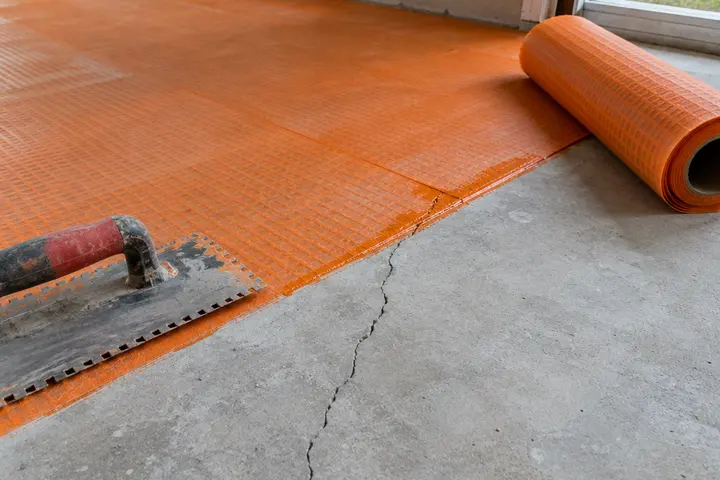
Crack isolation membrane over a slab crack before tile

Crack isolation

Cracks in the slab cause big problems later if they’re left alone. We fill and cover them with the right material for your flooring, so your new floor doesn’t crack down the road.

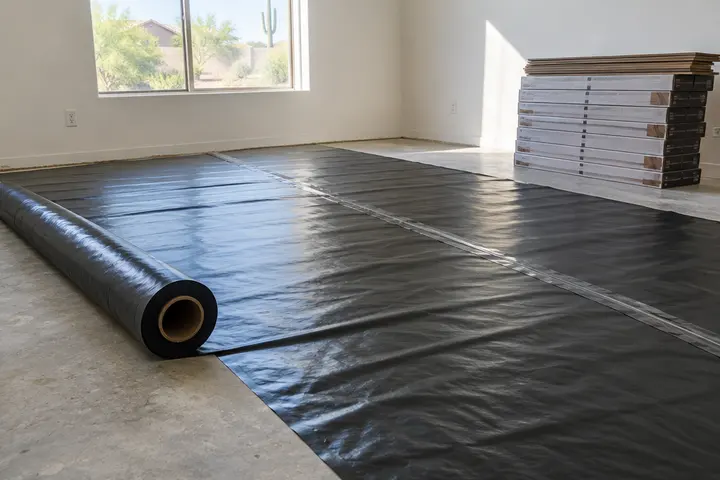
Moisture barrier underlayment rolled over a concrete slab

Moisture control

Concrete slabs can push moisture up into your new floor. Hardwood, laminate and vinyl each need their own type of moisture barrier, and we use the right one for your flooring so it doesn’t warp, swell or lift.

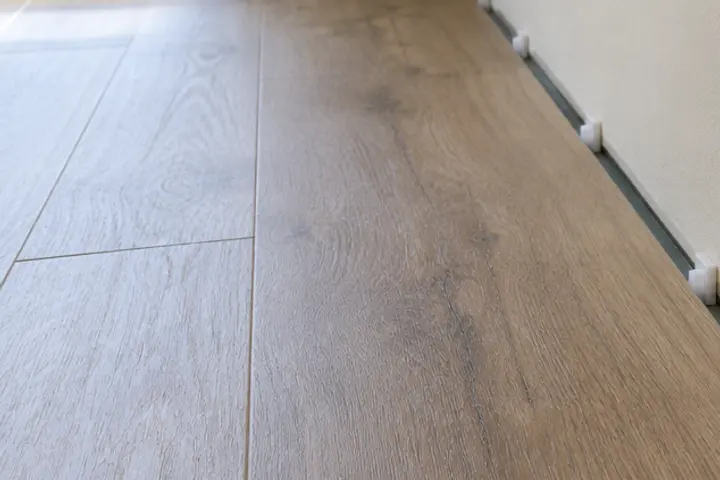
Expansion gap with spacers between a new plank floor and the wall

Room to move

Floors expand and shift in Arizona heat, so every floor needs a small gap at the wall to keep it from buckling or cracking. Depending on the flooring, we remove the baseboards or undercut them. So the gap stays hidden and the floor looks finished right up to the wall.

The Right Floor for Each Room

  • Kitchen. Porcelain tile or LVP. Both handle spills, dropped food and constant traffic. Tile is the most durable; LVP is softer to stand on while cooking and quieter.
  • Bathrooms. Porcelain tile is the standard, with LVP as a lower-cost option in a powder room. Check the height against the toilet flange and the tub edge before any floor goes over existing tile.
  • Laundry room. Anything waterproof: porcelain or LVP. A washer leak is not a question of if but when.
  • Living and family rooms. The widest choice. Tile and LVP for pets and a pool door, engineered hardwood or laminate for warmth and a wood feel.
  • Bedrooms. Carpet for softness and quiet, or the same hard floor as the rest of the house for one continuous look.
  • Stairs. Carpet, or LVP and hardwood with matching stair nosings. Stairs are priced per step, not per square foot.
  • Entry and the pool door. Porcelain tile takes wet feet and grit best. Whatever the floor, a mat inside and out at every exterior door saves it.

Many Phoenix homes end up with two floors: tile or LVP through the main living areas and wet rooms, and carpet in the bedrooms. Planning where they meet, usually at a doorway, keeps the transition clean.

Signs It Is Time for New Floors

  1. Cracked or hollow tile. Cracks that follow a line across several tiles usually come from the slab underneath, and hollow-sounding tiles have lost their bond.
  2. Worn or stained carpet. Traffic lanes, matted pile and stains that will not come out, or allergies that are better without it.
  3. Peaking or cupped planks. Laminate or wood that has taken on water, or a floating floor installed without enough room to expand.
  4. Grout that will not come clean. Dark, crumbling or missing grout lets water under the tile.
  5. An outdated look before a sale. Floors are one of the first things buyers notice in listing photos.
  6. A move-in. New flooring is easiest to install in an empty house, before the furniture arrives.

Any one of these is reason enough for a free in-home measure. We will tell you what is causing the problem and whether the fix is new flooring, a repair or slab work first.

How Flooring Installation Works

  1. In-home measure. We measure each room, look at what is down now and check the slab underneath where we can.
  2. Samples in your light. We bring samples so you see the floor in the room where it will go, next to your walls and cabinets.
  3. Written estimate. Material, removal, slab prep and installation are listed separately, with a clear timeline.
  4. Removal and prep. The old floor comes out with dust control, the slab is ground, filled and checked for flatness, and cracks and moisture are handled for the floor going down.
  5. Installation. Tile is set and grouted, or planks are laid with the right underlayment and expansion gap, and transitions are fitted at each doorway.
  6. Trim and walkthrough. Baseboards and thresholds go back, we clean up and haul debris away, and we walk the floor with you before we leave.

Most single rooms take one to two days once the materials are on site. A whole house with tile removal can take a week or more. Hardwood and laminate need time to acclimate in the house first, and tile needs time for the thinset and grout to cure before heavy furniture goes back.

Before You Hire Any Flooring Installer

  • License. Ask for the ROC license number and look it up on the Arizona Registrar of Contractors search. Check that the license is active and that its classification fits the work.
  • A look at the slab. A quote given without seeing the floor, or what is under it, leaves the prep out. Prep is where many flooring jobs go over budget.
  • Written estimate. Material, removal, prep and installation should be separate lines, with the product named, so you can compare quotes fairly.
  • Older homes. Ask how old vinyl tile or black adhesive will be handled before anyone starts grinding.
  • Who does the work. Ask who will be at your house. Flooring Installation Phoenix is a marketing website: depending on the job, a project may be handled by our own team or referred to an independent contractor, and our referral marketing disclosure explains how. Ask and we will tell you before anyone is scheduled.

Caring for New Floors in the Desert

  • Stop the grit at the door. Fine sand and caliche dust act like sandpaper on every floor. Mats inside and outside each exterior door, and a quick sweep or vacuum a few times a week, do more than any cleaner.
  • Felt pads on furniture. Chairs and stools are the main source of scratches on LVP, laminate and wood.
  • Manage the sun. Strong sun through west- and south-facing glass can fade wood and some LVP over the years and heats the floor near the window. Blinds or UV film help.
  • Clean for the floor you have. A damp mop and a neutral cleaner suit tile and LVP. Laminate and wood want a barely damp mop, never standing water or a steam mop unless the manufacturer allows it.
  • Seal cement grout. Standard cement grout stays cleaner with a sealer; many newer grouts do not need one. Ask which you have.
  • Keep the house steady. Wood and laminate do best when the air conditioning keeps temperature and humidity steady year-round, including when the house is empty in summer.

Get a Free Flooring Estimate in Phoenix

Tell us which rooms you are redoing and what is down now. We will set up a time to look at the space.

Call 602-288-5346

Free estimate, no obligation

What New Flooring Can Change

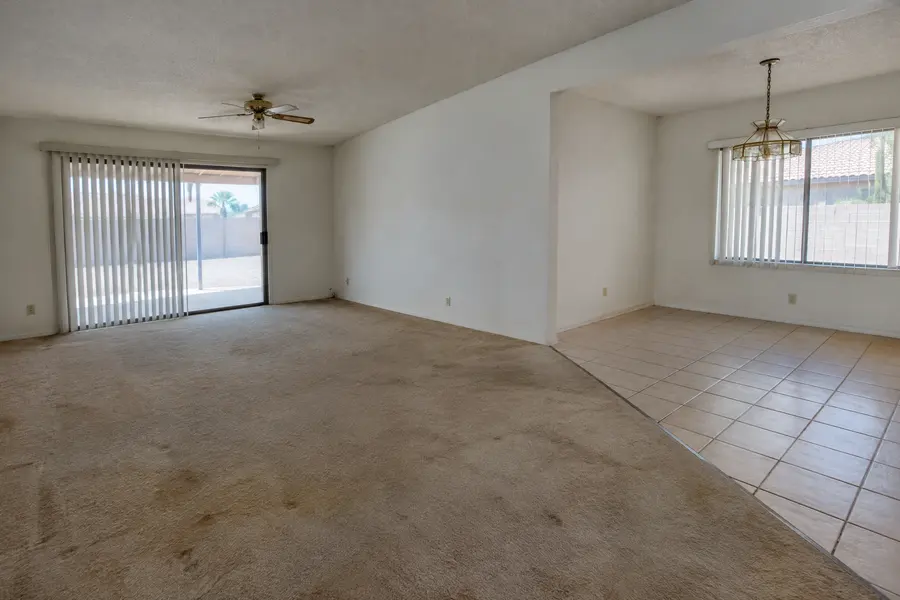
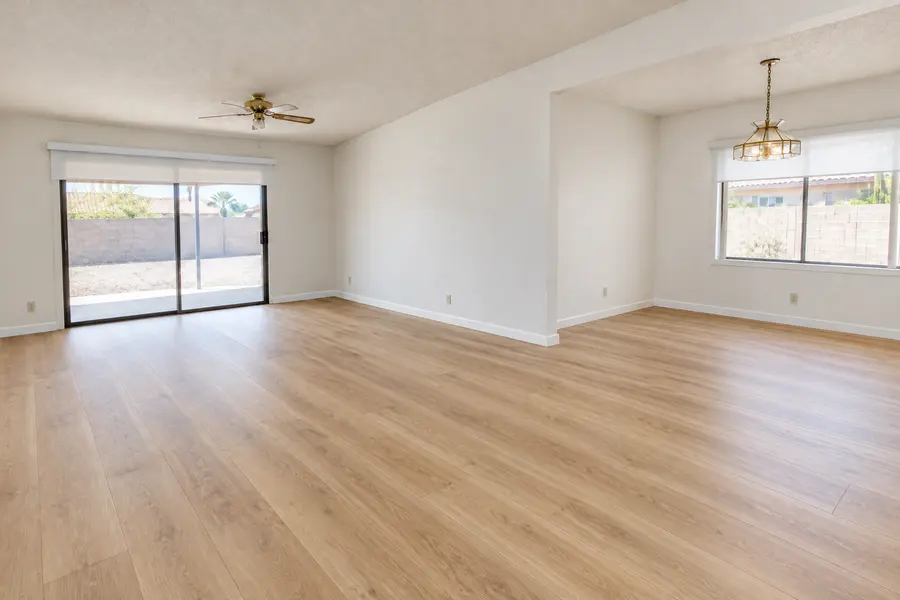
Plenty of Phoenix homes still have the carpet and tile they were built with, meeting at a metal strip in the middle of the room. One continuous floor through the main living areas makes the whole space feel bigger and easier to keep clean.

Dated living and dining area with worn carpet and old ceramic tile
Before
The same room with one continuous new floor
After

Illustration of a typical before-and-after, not a specific client project.

Get a Free Estimate

Arcadia neighborhood street in Phoenix with Camelback Mountain

Where We Install Flooring in Phoenix

We work across the City of Phoenix. Each neighborhood page covers the kind of homes and flooring projects we see there.

Flooring Installation Phoenix5225 N Central Ave Ste 106, Phoenix, AZ 85012602-288-5346
Get directions

Flooring Guides for Phoenix Homes

Guides

All flooring guides →

Start here

Phoenix Flooring Questions

How much does flooring installation cost in Phoenix?

It depends on the flooring you choose, the square footage, and how much removal and slab prep the job needs. National cost guides put new flooring at $4 to $15 per square foot installed (HomeGuide), and removing tile and leveling a slab can add as much labor as the installation itself. We give a written estimate after seeing the space.

What is the most popular flooring in Phoenix homes?

Porcelain tile and luxury vinyl plank are the two most common hard floors here. Both handle dust, grit and spills well. Carpet stays popular in bedrooms.

Can new flooring go over my existing tile?

Sometimes. If the tile is flat and firmly bonded, LVP or laminate can float over it. Loose, cracked or uneven tile should come out first. Our guide to putting LVP over tile covers the checks.

Do you handle the old floor removal?

Yes. We remove tile, carpet, wood and vinyl, grind the slab and haul the debris away, with dust control in the house.

Which parts of Phoenix do you serve?

We work across the City of Phoenix, including Arcadia, Ahwatukee, Biltmore, Desert Ridge, North Phoenix and Moon Valley.

Is LVP or laminate better for a Phoenix home?

LVP has a waterproof core, so it suits kitchens, laundry rooms and homes with pets. Laminate has a harder, very scratch-resistant surface and often costs a little less, but its wood-fiber core does not like standing water. Many Phoenix homes use LVP in wet areas and either one in living areas and bedrooms.

Is porcelain better than ceramic tile?

Porcelain is a type of ceramic tile that absorbs 0.5% of its weight in water or less, under the ANSI A137.1 standard. That makes it denser and better for floors that see heavy use or water. Glazed ceramic is still a good, often cheaper choice for walls and lighter-traffic rooms.

How long does flooring installation take?

Most single rooms take one to two days once the materials are on site. A whole house with tile removal and slab prep can take a week or more. Tile needs extra time for thinset and grout to cure before heavy use.

Does hardwood work in the Arizona heat?

Yes, when it is acclimated and the house is kept in a steady range. The National Wood Flooring Association recommends 60 to 80 degrees Fahrenheit and 30 to 50 percent relative humidity, which is why engineered hardwood is the common choice on a Phoenix slab.

My house is older. Is removing the old floor safe?

The EPA lists vinyl floor tiles, the backing on vinyl sheet flooring and some floor adhesives among the places asbestos may be found in older homes. If an older home has original vinyl tile or black adhesive, it should be tested before anyone sands, grinds or scrapes it.

Do I need to move my furniture?

Tell us at the estimate. Rooms need to be clear before work starts, and we will explain what we can move and what should be packed or moved ahead of time, such as electronics and anything fragile.

Can you install flooring while we live in the house?

Yes. Most homes are done a few rooms at a time so the household can keep using the rest of the house. Kitchens and the main living area are the most disruptive, so we plan those around your schedule and keep dust control up during removal.

How soon can we walk on new floors?

Floating LVP and laminate can usually be walked on as soon as they are installed. Tile has to wait for the thinset and grout to cure, and the cure times on those products decide when foot traffic and furniture can return. We tell you before we leave.

What is a transition strip?

A transition is the trim piece where two floors meet or where a floor ends at a doorway or slider. It covers the expansion gap, handles any height difference and keeps edges from chipping. Planning where transitions go is part of every estimate.

How do I check that an installer is licensed?

Ask for the contractor's Arizona Registrar of Contractors license number and look it up on the Registrar's contractor search before work starts. Check that the license is active and that its classification fits flooring work.

Plan Your New Floors

Whether it is one bathroom, a set of stairs or the whole house, flooring installation in Phoenix goes better with a plan for the slab, the material and the transitions. Call 602-288-5346 or request an estimate online.

Free estimate, no obligation.

Call Now · 602-288-5346